FABCON Europe 2026: Connecting Data, AI and Business Value

FABCON Europe 2026 brought data professionals, Microsoft product leaders, partners and community experts together in Barcelona to explore the future of data, analytics and AI.
From Microsoft Partner Day to technical sessions covering real-time intelligence, semantic models and AI agents, one theme stood out: the Data + AI ecosystem is becoming increasingly connected, and understanding business context is becoming more important than ever.

Microsoft Partner Day: Customer Value and the Future of Consulting

The week began with Microsoft Partner Day, where the focus extended beyond technology to customer challenges, business outcomes and the evolving role of Microsoft partners.

During Partner Day, we had the opportunity to speak with Arun Ulag, Executive Vice President of Azure Data at Microsoft, about the future of consulting in an increasingly agentic world.

One reflection from the discussions was how AI and automation are changing the way technology solutions are delivered. As implementation becomes more efficient, consultants have an opportunity to contribute more through business understanding, architecture and identifying where technology creates meaningful value.

For data engineers and architects, this reinforces the importance of engaging early in customer conversations. Successful delivery starts before implementation — with understanding the problem, defining the right approach and connecting business and technical perspectives.

From Connected Data to Connected Business Understanding

The conference announcements provided a practical view of where Microsoft’s Data + AI ecosystem is heading.

In his FABCON keynote recap, Arun Ulag highlighted the importance of connecting enterprise data and business context to Microsoft Copilot and AI agents.

One significant development was Fabric IQ becoming generally available in Microsoft Copilot Chat and Cowork, allowing users to ask business questions grounded in trusted Power BI semantic models and reports.

Meanwhile, developments around Fabric IQ Ontology and Semantic Views point towards making business definitions, relationships and metrics reusable across analytics, applications and AI.

Consider a business asking an AI agent why a particular customer order is delayed. Accessing order records is only part of the solution. Understanding how orders relate to customers, inventory, deliveries and business rules is what makes the answer meaningful.

This is where semantic models and ontology become increasingly relevant: connecting data to the business concepts it represents.

Making Data Engineering and Analytics More Accessible

Another interesting direction was the growing role of AI-assisted development.

Project Osmos, with its agentic data engineering capabilities, and developments around Fabric Apps demonstrated how AI is becoming part of building data pipelines, analytics and business applications.

As highlighted in Bogdan Crivat’s FABCON analytics recap, the developments also extend to GPU-accelerated warehouse queries, more open semantic definitions and bringing governed analytics into everyday workflows.

Other announcements, including OneLake IQ Sharing, Fabric observability and improvements to real-time intelligence, reinforced the broader direction of a more integrated ecosystem.

The growing Fabric community, including Microsoft MVPs and independent experts, also brought valuable practical perspectives on adoption, governance and architectural trade-offs.

These innovations can reduce the effort required to build solutions, but they also make good data foundations, governance and architectural decisions even more important.

What Does This Mean for Customers and Consultants?

For organisations, the opportunity goes beyond adopting individual Fabric capabilities. It is about connecting existing data investments, business knowledge and AI to solve real problems.

For consultants, this means looking beyond individual technologies and thinking more holistically about the customer’s data landscape.

Questions such as:

  • What business problem are we solving?
  • How are business concepts connected?
  • Can the same trusted definitions support reporting, applications and AI agents?

become increasingly important.

The role of data professionals is not becoming less technical. Rather, it is expanding towards combining engineering expertise with semantic architecture, business understanding and value strategy.

Looking Ahead

FABCON Europe 2026 offered plenty of new capabilities, but the biggest takeaway was not about any single announcement.

The boundaries between data engineering, analytics, AI and business applications are becoming increasingly blurred. As these building blocks come closer together, organisations have new opportunities to make better use of their data and turn it into meaningful business outcomes.

For us at Etlia, this reinforces the importance of combining strong technical expertise with a deep understanding of our customers’ businesses — helping them navigate evolving technologies, make informed architectural choices and focus on solutions that deliver lasting value.

As technology becomes easier to implement, the real differentiator is knowing what to build, how the data connects and where it creates value. And that starts with understanding the business.

What could this evolving Data + AI landscape mean for your organisation? Whether you’re exploring new opportunities or rethinking your existing data architecture, we’d be happy to exchange ideas and explore what makes sense for your business. Get in touch and let’s explore the possibilities together!

– Raaju Srinivasa Raghavan, Partner & Senior Cloud Consultant / Data Engineer
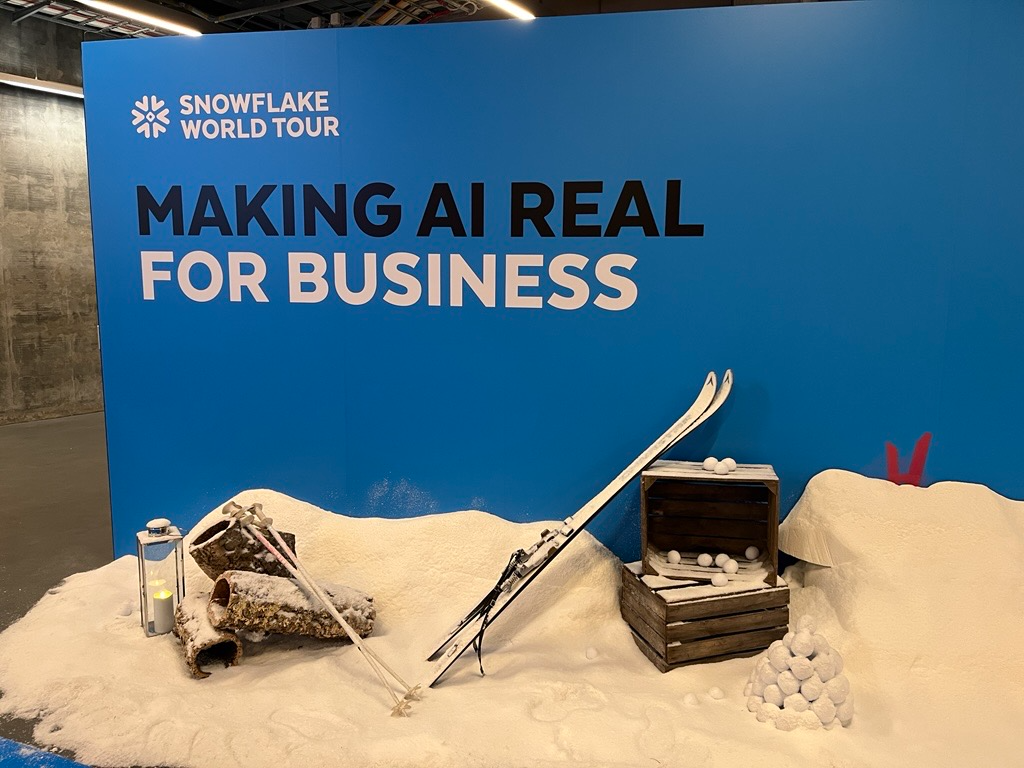
Snowflake World Tour 2026: AI agents are changing how we use data – but quality data still matters

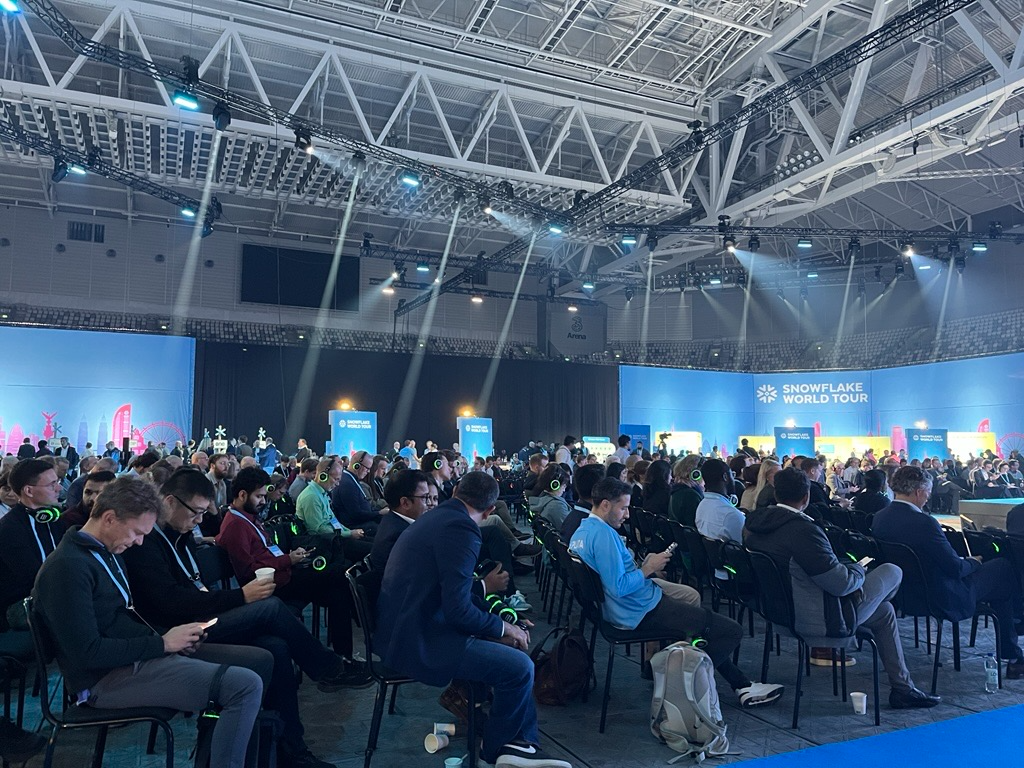
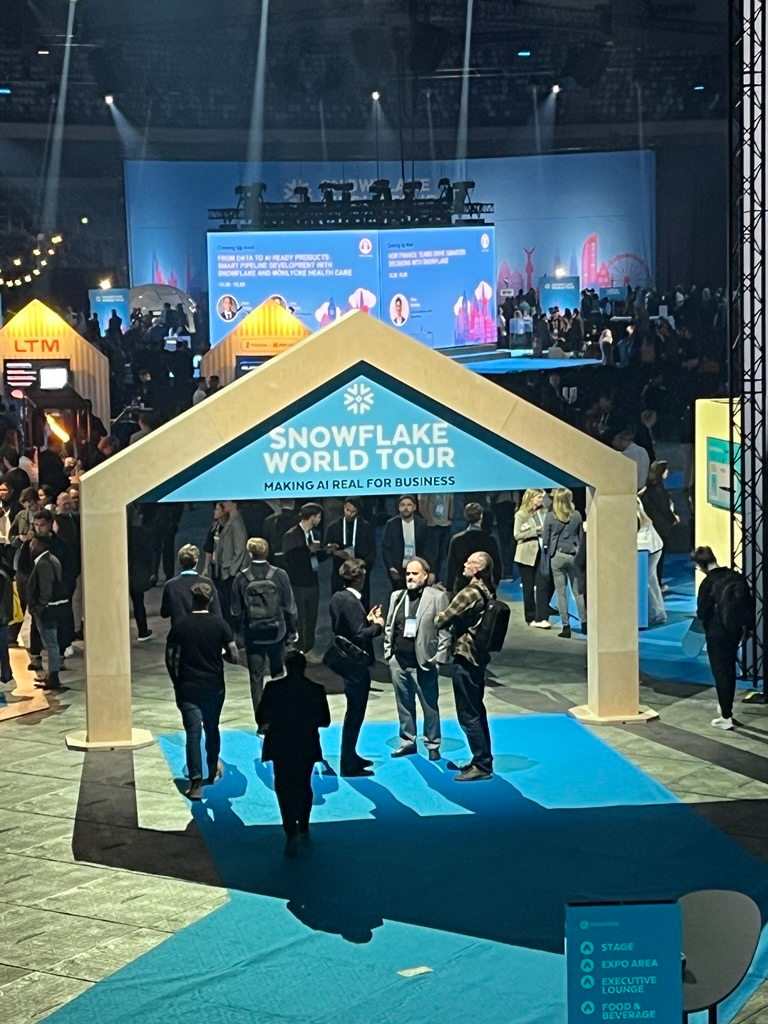
Snowflake World Tour 2026 returned to Stockholm, bringing together more than 2,000 attendees to explore the latest developments in data and AI from Snowflake. The agenda featured more than 30 sessions and 67 speakers representing 11 different industries, covering everything from technical solutions and customer stories to Snowflake’s latest capabilities.

With such a broad agenda, it was easy to build the day around your own interests. My choices focused particularly on Snowflake’s AI capabilities, data governance and cost management, as well as how AI is changing data engineering.

Based on what we saw at the event, the direction is clear: we are moving beyond individual AI features towards agents and the concept of the Agentic Enterprise. AI is no longer limited to answering questions. It can use an organisation’s data, applications and business context to perform tasks.

At the same time, one message came through across almost every topic: the more responsibility we give to AI, the more important trusted data, governance and cost management become.

Snowflake World Tour 2026 Keynote – towards the Agentic Enterprise

The Agentic Enterprise was a central theme in Snowflake’s keynote. However, taking advantage of AI agents requires more than simply adopting a new AI service. Agents need trusted data, business context, governance and integrations with the organisation’s other systems.

Snowflake’s agentic environment is built around three key elements:

  • enterprise data and context,
  • AI models,
  • and software and applications.

These are brought together by an agent management layer designed to connect and manage the overall environment in a controlled way.

Examples highlighted in this context included Snowflake CoWork, which brings AI agents into employees’ daily workflows, and the more developer-focused Snowflake CoCo, which aims to accelerate the development of Snowflake-based software and data solutions with AI assistance.

At the same time, Snowflake emphasised the importance of an organisation’s own data, its business context and a governance model that enables agent activity to be controlled.

Another interesting announcement in the keynote was the collaboration between Snowflake and European cloud provider STACKIT. The collaboration aims to provide European organisations with a local cloud option. STACKIT operates data center in Germany and Austria.

Trusted data is still the foundation 

Despite the strong focus on AI, one familiar theme came up repeatedly throughout the day: without high-quality, well-governed data, there can be no trustworthy AI.

Swedbank’s presentation explored the bank’s Data & AI transformation and Snowflake’s role as its technical foundation.

The goal is to move from a situation where data is primarily seen as an IT responsibility towards a model where data is a shared resource across the entire business. Key objectives of the transformation include improving data quality and availability, reducing manual work, and bringing analytics and AI closer to everyday business decision-making.

Perhaps the most important message from the presentation was simple: trusted AI requires trusted data. Building AI solutions does not reduce the importance of a solid data platform, data quality or governance solutions. On the contrary, they become even more important.

More control over Snowflake governance and costs 

Snowflake has introduced several new capabilities for cost management and control. Costs can be monitored from the organisational level all the way down to individual users and teams. Budgets can also be defined for specific resources or based on tags.

AI-related costs can now be monitored more closely as well. This will become increasingly important as the use of AI services grows, as models and agents introduce a new cost dimension into the Snowflake environment. Per-user quotas and the ability to automate actions when budget thresholds are reached make these costs easier to manage.

The aim is to give users more freedom to build solutions while allowing the organisation to maintain control over costs.

Semantic Views create a shared meaning for data and AI 

As AI adoption grows, the importance of the semantic layer increases. If, for example, revenue is defined differently in Power BI, SQL queries and the context provided to an AI agent, the same question may produce several different answers.

Snowflaken Semantic View aims to address this by centrally defining business concepts, metrics, dimensions and the relationships between them in Snowflake. Semantic Studio makes semantic models easier to build. Previously, these models were largely created using YAML definitions, but they can increasingly be created and maintained visually and with the help of natural language.

Another interesting development is the integration of Snowflake’s semantic layer with other tools that use semantic models. For example, existing Power BI models can be used as a starting point for a Semantic View, while the same definitions can be utilised in Power BI and Excel.

Ultimately, the same business definitions can serve BI reporting, SQL queries, applications and AI agents.

Snowflake CoWork and Cortex Agents take AI from questions to action 

Snowflake CoWork was one of the most visible AI topics of the day. Its goal is to act as a personal work tool that understands an organisation’s data and context and can use different tools to perform tasks.

The key shift compared with earlier AI solutions is the move from a question-and-answer model towards action. Instead of simply analysing data and generating answers, an agent can use other agents, tools and enterprise systems to complete tasks.

This development is supported by capabilities such as CoWork automations, user-specific skills and integrations with other tools. In practice, the goal is that users do not need to know which agent or technical component is required for a particular task. Instead, CoWork can route the task to the appropriate agent.

AI is no longer simply a separate feature layered on top of the data platform. It is becoming an integral part of everyday work.

The role of the Data Engineer is changing with AI

Another topic that emerged throughout the day was the changing role of the Data Engineer. With AI, more tasks can be automated, including code generation, routine debugging, creating initial pipeline structures, and code migrations and refactoring.

This does not eliminate the need for Data Engineers. Instead, the focus is shifting towards understanding systems and solutions as a whole, designing data products, governance and understanding the business.

The value of a Data Engineer will therefore not be determined simply by how quickly they can make a pipeline or write SQL. The ability to understand what kind of solution should be built, how data should be governed and how the technical implementation serves the business will become increasingly important.

Snowflake World Tour 2026 – AI is moving from experimentation into the data platform

Snowflake World Tour was once again a valuable opportunity to see where Snowflake and the broader data industry are heading.

The future clearly looks increasingly agentic. At the same time, one of the strongest takeaways from the day was that AI does not reduce the importance of high-quality data, governance or cost management – quite the opposite.

The more opportunities we give AI to use enterprise data and perform tasks independently, the more important it becomes to understand what the data means, who is allowed to use it and at what cost.

-Asko Ovaska

Partner, Senior Data Engineer

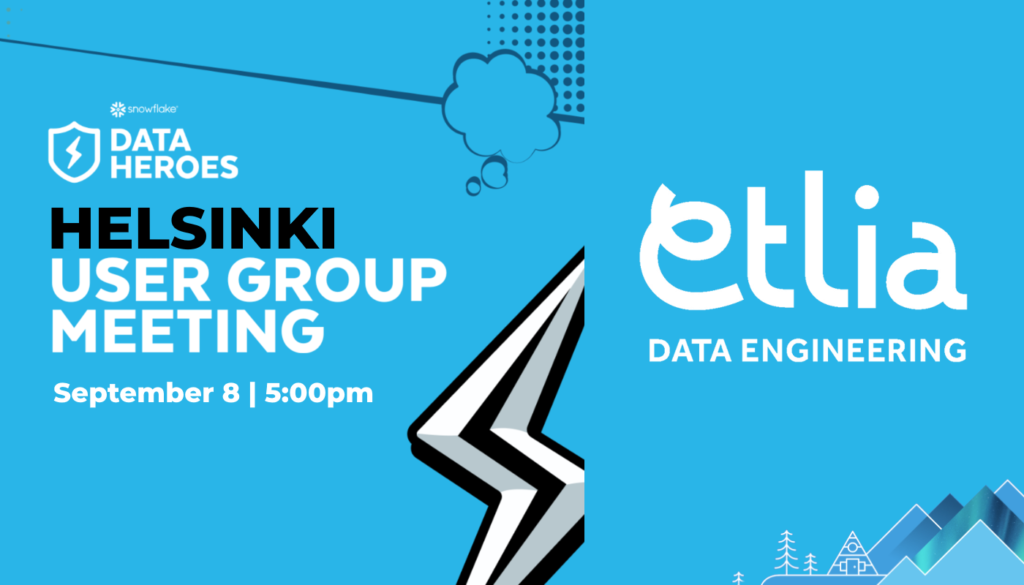
Snowflake User Group Helsinki at Etlia – September 8, 2026

Etlia is proud to host and sponsor the September edition of Snowflake User Group Helsinki.

Join us for an evening dedicated to Snowflake, modern data platforms and analytics at Etlia’s office in Keilaniemi. The evening features a customer presentation from Fennia on identifying, tagging and utilizing PII data in Snowflake, followed by a recap of the most important announcements from Snowflake Summit 2026 presented by Snowflake. There will also be plenty of opportunities to network with members of the Finnish Snowflake community.

📅 Tuesday, September 8, 2026

🕔 5:00 PM–8:00 PM

📍 Etlia Oy
Finago Tower
Keilaniementie 1
02150 Espoo, Finland

🍕 Light bites and refreshments will be served.

🎟️ Participation is free, but registration is required.

👉 Register for the event

Agenda

5:00 PM
Arrivals, food & networking

5:30 PM
Snowflake User Group Helsinki welcome
Mika Heino & Asko Ovaska (Etlia)

5:40 PM
Jani Thind (Fennia)
Identifying, tagging and utilizing PII data in Snowflake
Presentation in Finnish + Q&A

6:30 PM
Break

6:40 PM
Elli Pennanen (Snowflake)
Snowflake Summit 2026 – Key announcements and their practical impact

7:30 PM
Networking

8:00 PM
Event ends

We look forward to welcoming the Finnish Snowflake community to Etlia!

SAP Sapphire Madrid 2026: From AI Assistance to the Autonomous Enterprise 

A Few Days in Madrid 

I had the opportunity to attend SAP Sapphire Madrid 2026 from 19 to 21 May, joining customers, partners, and SAP experts from across Europe to discuss the future of enterprise technology. While there were many interesting sessions throughout the event, the Global Keynote on 20 May, titled The Beginning of Better, stood out as the clearest expression of where SAP sees business technology heading next.

Presented by Christian Klein, Sebastian Steinhaeuser, Philipp Herzig, and Muhammad Alam, the keynote focused on a vision that goes beyond using AI as a productivity tool. Instead, SAP introduced its concept of the Autonomous Enterprise, where people define objectives, policies, and boundaries, while AI agents execute business processes within governed and trusted environments.

A Shift in How Enterprise AI Is Framed

One of my main observations from the keynote was that SAP is moving the conversation beyond AI assistants that simply help employees perform tasks faster. The focus is increasingly on AI systems that can carry out work autonomously while remaining under human oversight.

The centrepiece of this vision is the newly announced SAP Autonomous Suite. SAP described it as a framework that brings together AI agents, assistants, business applications, and governance capabilities into a single operating model. Rather than deploying isolated AI solutions, organizations would be able to orchestrate business processes that span multiple functions while maintaining visibility, compliance, and control.

This felt like an important distinction. Many organizations are currently experimenting with AI pilots and productivity tools, but the challenge often lies in connecting those capabilities to real business processes. SAP’s message was that enterprise AI needs to be embedded directly into operational systems rather than existing alongside them.

The Evolution of Joule

Another significant announcement was the evolution of Joule. Joule is now expanding into a broader AI workspace.

SAP presented Joule Work, Joule Assistants, Joule Agents, and Joule Studio 2.0 as components of a larger ecosystem designed to support both employees and autonomous business operations. The direction suggests a future where users interact with AI not only through conversational assistance, but also through specialized agents capable of executing defined business tasks.

What I found particularly interesting was how SAP positioned these capabilities as part of a coordinated environment rather than separate products. The emphasis was on enabling collaboration between people, AI assistants, and autonomous agents within existing business workflows.

Trust, Data, and Governance Take Center Stage

Perhaps the most important theme throughout Sapphire was trust.

SAP repeatedly emphasized that autonomous AI can only be effective when it is grounded in trusted business data and governed appropriately. This is where SAP Business Data Cloud, the new SAP Business AI Platform, and the SAP AI Agent Hub fit into the broader strategy.

The SAP Business AI Platform was presented as the foundation for building, governing, deploying, and operating enterprise AI agents. At the same time, SAP Business Data Cloud provides the business context that agents need to make informed decisions, while governance capabilities ensure transparency and accountability.

I was also interested to see SAP highlight its collaboration with Mistral AI and its commitment to trusted European AI and sovereign AI capabilities. For many organizations, particularly in Europe, questions around data sovereignty, regulatory compliance, and trusted AI infrastructure are becoming just as important as model performance.

Why This Matters

For organizations exploring AI adoption, the announcements at Sapphire were less about individual features and more about architecture and operating models.

Many companies have already discovered that deploying AI tools is relatively easy compared to scaling them across critical business processes. The challenge is creating an environment where AI can operate reliably, securely, and in alignment with business objectives.

The message from the keynote The Beginning of Better was clear: the next phase of enterprise AI is not simply AI assisted work. It is AI executed business processes operating under human governance. SAP’s vision of the Autonomous Enterprise brings together Joule, AI agents, trusted business data, and the SAP Autonomous Suite to make that transition possible.

Looking Ahead

Leaving Madrid, my impression was that enterprise AI discussions are becoming more practical and more operational. The focus has shifted away from experimentation toward questions of governance, execution, trust, and measurable business outcomes.

Whether organizations are ready for fully autonomous business processes today is another question. However, the direction presented at SAP Sapphire 2026 suggests that enterprise software is steadily evolving toward environments where humans set the goals and AI increasingly handles the execution. It will be fascinating to see how quickly that vision becomes reality over the coming years.

-Juuso Maijala, CEO

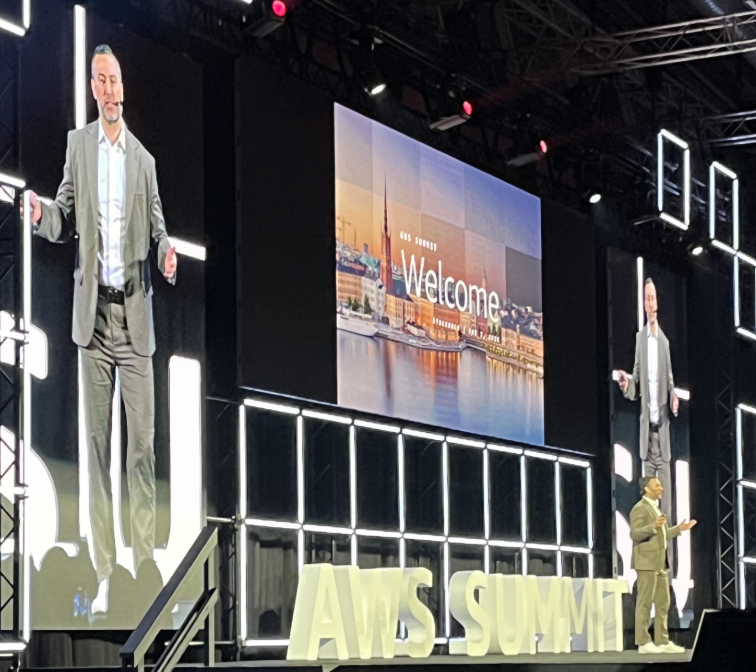
Democratizing Data and Intelligent Agents – What Did We Learn from AWS Summit?

For me, one sure sign that summer is approaching is AWS Summit Stockholm. The event offered a glimpse into where cloud services, data platforms, and AI solutions are heading. This year’s clear themes were agent-based AI, data management through modern data lakes, and AWS’s ambition to make AI a genuine part of business processes — not just isolated technology projects.

The event featured more than 80 sessions across different domains, and this blog highlights key takeaways from the sessions I attended. The sessions focused on agent-based solutions, generative analytics, and modern data lakes.

Agent-Based AI Takes Center Stage

The keynote outlined AWS’s vision that the next phase of AI will be built around intelligent agents. AWS emphasized that organizations are no longer aiming merely to leverage individual AI models, but to build complete intelligent workflows and automation-supporting agents.

Several customer stories illustrated this shift in practice. Danske Bank has migrated its infrastructure to AWS with the goal of modernizing its data and analytics platform while accelerating service development. Meanwhile, Zenseact shared how it has built a data factory on AWS to support autonomous driving development, where massive amounts of data, analytics, and machine learning are combined at scale.

One particularly interesting case was DNB Bank’s KYC (Know Your Customer) solution, where AI is used for customer data verification and risk management. The solution combined Amazon Bedrock, generative AI, and agent-based automation. It was a strong example of how organizations are moving AI beyond isolated experiments toward production-ready business solutions.

Perhaps the keynote’s most important message, however, related to data. AWS repeatedly stressed that without a clear data strategy, it is impossible to build a sustainable AI strategy. This is visible in many organizations today: a large share of IT budgets is still spent maintaining legacy systems, slowing down AI adoption.

From a technology perspective, Amazon Bedrock, new AWS agent solutions, and the continued expansion of Amazon S3 into an increasingly powerful and versatile data layer were particularly prominent.

Amazon Quick and Generative BI

AWS aims to lower the barrier for organizations to utilize data. One approach is Amazon Quick, which brings generative AI into analytics and reporting.

The Amazon Quick session introduced features such as QuickSight, QuickFlows, Quick Automate, and Quick Research. In practice, these enable analytics, automation, and information retrieval using natural language without requiring deep technical expertise.

Within Amazon Quick, chat-based agents and knowledge space solutions are integrated directly into daily business workflows. This trend is visible across the market: analytics is no longer limited to BI teams — the goal is to make data a truly organization-wide tool.

Technologically, the solution relies heavily on generative AI, Amazon Bedrock, and AWS’s analytics ecosystem.

Modern Data Platforms and S3 Tables

From a data perspective, a major theme throughout the event was the construction of modern data platforms around Apache Iceberg and S3 Tables.

The “Modern Batch Analytics” session demonstrated how AWS is building next-generation analytics solutions by combining Amazon S3 Tables, Apache Iceberg, AWS Glue, Lake Formation, and Athena. The goal is to enable scalable and transactional data lakes without the limitations of traditional data warehouse solutions.

The session also highlighted data governance and security. Lake Formation’s role in access management and Glue orchestration were key parts of the overall architecture.

SageMaker Unified Studio and QuickSuite are also bringing analytics, machine learning, and visualization closer together on a single platform. AWS’s strategy appears to focus on building a unified data ecosystem where data engineering, analytics, and AI integrate seamlessly.

Case Funnel: Agent-Based Data Integrations

One of the most practical sessions was Funnel’s presentation on agent-based data integrations.

Funnel addressed a familiar challenge for data organizations: SaaS APIs constantly change, integrations are fragile, and maintaining them consumes significant time and effort.

As a solution, Funnel has built a declarative connector platform that is now being extended with agent-based AI. The idea is that AI agents can automatically interpret APIs, build data models, and transform raw data into analytics-ready formats.

This was one of the clearest examples of how generative AI can be applied in data engineering on a practical level. At the same time, it reflected the broader transformation taking place across the industry: manual integration work is increasingly being automated.

Funnel’s Open Data Lake solution built on AWS also demonstrated the growing importance of open formats and data lake architectures.

Apache Iceberg and Modern Data Lakes

The final session focused on Apache Iceberg and building modern data lakes on top of Amazon S3.

Apache Iceberg emerged during the event almost as a standard for modern data platforms. The technology offers transactional capabilities, schema evolution, and improved performance for large-scale data lakes.

The session particularly covered operational best practices, including metadata optimization, schema design, and cost management.

AWS strongly emphasized its S3 Tables solution, which aims to simplify the management of Iceberg-based data lakes. AWS clearly sees data lakehouse architectures as a central part of future analytics and AI solutions.

An important observation was that data lake development is no longer focused solely on storage. The goal now is to build platforms that simultaneously support analytics, machine learning, generative AI, and agent-based applications.

Summary

AWS Summit Stockholm 2026 reinforced the understanding that AI is moving from experimentation toward production use — although there is still a journey ahead. Agent-based solutions, generative analytics, and modern data lakes are advancing rapidly.

At the same time, the event served as a reminder that a successful AI strategy is still built on top of a strong data foundation. Organizations need to modernize their data architectures, automate integrations, and manage data effectively before they can fully realize the business value of AI.

AWS’s strong investments in Amazon Bedrock, Apache Iceberg, S3 Tables, and agent-based solutions provide a clear indication of where the cloud and data ecosystem is heading in the coming years.

-Asko Ovaska, Partner, Senior Data Architecht & Engineer  

SAP Business Data Cloud explained: how Snowflake and Databricks fit into SAP’s multi-platform data strategy

Insights from SAP TechEd Berlin 2025: why data became SAP’s strategic core

Reflecting on SAP TechEd Berlin 2025, one theme stood out above all others: data has become the foundation of SAP’s future strategy. 

While AI demonstrations and development tooling attracted attention, the most meaningful announcements focused on how enterprise data is accessed, shared, and activated across platforms. 

At the center of this shift is SAP Business Data Cloud (BDC), a strategic layer designed for organizations operating in increasingly complex, multi-platform landscapes. Its implications are significant for customers navigating increasingly complex data landscapes. 

SAP Business Data Cloud: embracing reality, not fighting it

Enterprise data is no longer confined to a single platform. SAP systems, cloud data warehouses, and analytics tools already coexist in most organizations. What SAP Business Data Cloud does differently is acknowledge this reality instead of trying to replace it. 

BDC is designed as an open data access layer, connecting SAP data natively with platforms such as:

  • Snowflake
  • Databricks
  • Google Cloud
  • and Microsoft Fabric

The emphasis on zero-copy data sharing is particularly important: data can be consumed and analyzed without constant replication. This reduces cost, latency, and architectural complexity. 

From Etlia’s perspective, this is a welcomed and pragmatic shift. Many organizations already run hybrid data architectures, and BDC provides a way to integrate SAP data into those environments without forcing disruptive migrations or one-size-fits-all solutions. 

How SAP Business Data Cloud works with Snowflake, Databricks and Microsoft?

SAP’s message at TechEd was clear: there is no single “correct” data platform. Instead, SAP is enabling a coordinated, multi-platform data strategy where each platform plays a distinct role.

Platform roles in SAP’s multi-platform data architecture

  • SAP Business Data Cloud (BDC)
    • Open data access layer and governance backbone, connecting SAP data with external platforms securely and consistently
  • Snowflake
    • Scalable analytics and data sharing platform, positioned as an SAP-certified solution extension
  • Databricks
    • Scalable analytics and data sharing platform including advanced analytics, machine learning, and data science workloads
  • Microsoft Fabric
    • Tight integration with Microsoft 365, Power BI, and the Power Platform, especially in Microsoft-centric ecosystems

This model reflects how enterprises already work in practice: SAP remains the system of record, while analytics, AI, and innovation happen across multiple specialized platforms.

Snowflake as a Strategic Extension, Not Just an Integration 

One of the most notable announcements at TechEd was SAP’s positioning of Snowflake as a Solution Extension to SAP Business Data Cloud. 

This is more than a technical integration or partnership label. As a solution extension, Snowflake becomes: 

  • Fully certified, packaged, and sold by SAP 
  • Supported by SAP throughout the full lifecycle 
  • Aligned with SAP’s roadmap and enterprise support model 

Crucially, SAP Snowflake includes the full Snowflake feature set while complementing it with SAP-specific strengths, particularly in planning. 

From Etlia’s point of view, this confirms something we already see in customer projects: Snowflake, Databricks, and Fabric are not competing replacements for SAP, but complementary platforms. The strategic shift from SAP is clear: value is created by choosing the right tool for the right workload and ensuring that data flows cleanly, securely, and governably between platforms.

One Data Strategy, Multiple Platforms

A key takeaway from SAP TechEd Berlin 2025 is that SAP is no longer pushing a single “correct” data platform. Instead, it is enabling a multi-platform data strategy, where: 

  • SAP remains the system of record for core business processes 
  • Snowflake excels in scalable analytics and data sharing 
  • Databricks supports advanced analytics and data science 
  • Microsoft Fabric fits naturally into Microsoft-centric ecosystems 

For customers, the challenge is no longer choosing one platform over another. The real challenge is designing an architecture where these platforms work together, with clear ownership, strong governance, and measurable business value.

Data as the Foundation for Enterprise AI 

AI discussions at TechEd consistently came back to one point: AI only works if the data foundation is solid. 

SAP’s introduction of SAP-RPT-1, an AI foundation model for structured business data, reflects this mindset. Rather than focusing on language alone, SAP is investing in models that understand tables, relationships, and enterprise semantics, the kind of data that actually runs businesses. 

With Model Context Protocol (MCP), SAP is also addressing a growing need: enabling Large Language Models to access business data in a governed, contextual way. This opens the door to AI use cases that go beyond chatbots and into real decision support, analytics, and automation. 

From Etlia’s perspective, this reinforces a critical message to customers: AI success is not about tools, but about data readiness. Clean models, shared semantics, and well-designed data architectures matter more than the choice of any single AI platform. 

What This Means in Practice

SAP TechEd Berlin 2025 showed a SAP that is more open, more realistic, and more aligned with how enterprises actually operate today.

SAP Business Data Cloud, deeper partnerships with Snowflake, Databricks and Microsoft Fabric and native support for multi-platform architectures all point in the same direction. 

For organizations, the question is no longer whether SAP data will live alongside Snowflake, Databricks, or Fabric, but how well those environments are integrated. 

And that is where the work for Etlia begins.

– Juuso Maijala, CEO


Etlia is a data consultancy specializing in SAP, Snowflake, Databricks, and Microsoft Fabric architectures for enterprise environments.

Etlia works with organizations designing SAP-centric data architectures where SAP Business Data Cloud acts as the governance and access layer, while analytics, AI, and business intelligence are delivered across multiple best-of-breed platforms.

.